When a vehicle suddenly will not start after an ECU fault, the problem is rarely just the inconvenience. It is the lost work day, the van off the road, the garage bay tied up, or the customer wondering if the dealer is about to hand them a painful quote. That is where an ecu cloning service can make real sense. In the right situation, it can get a vehicle running again without the cost and delay that often comes with replacing and coding a brand-new unit.
What an ECU cloning service actually does
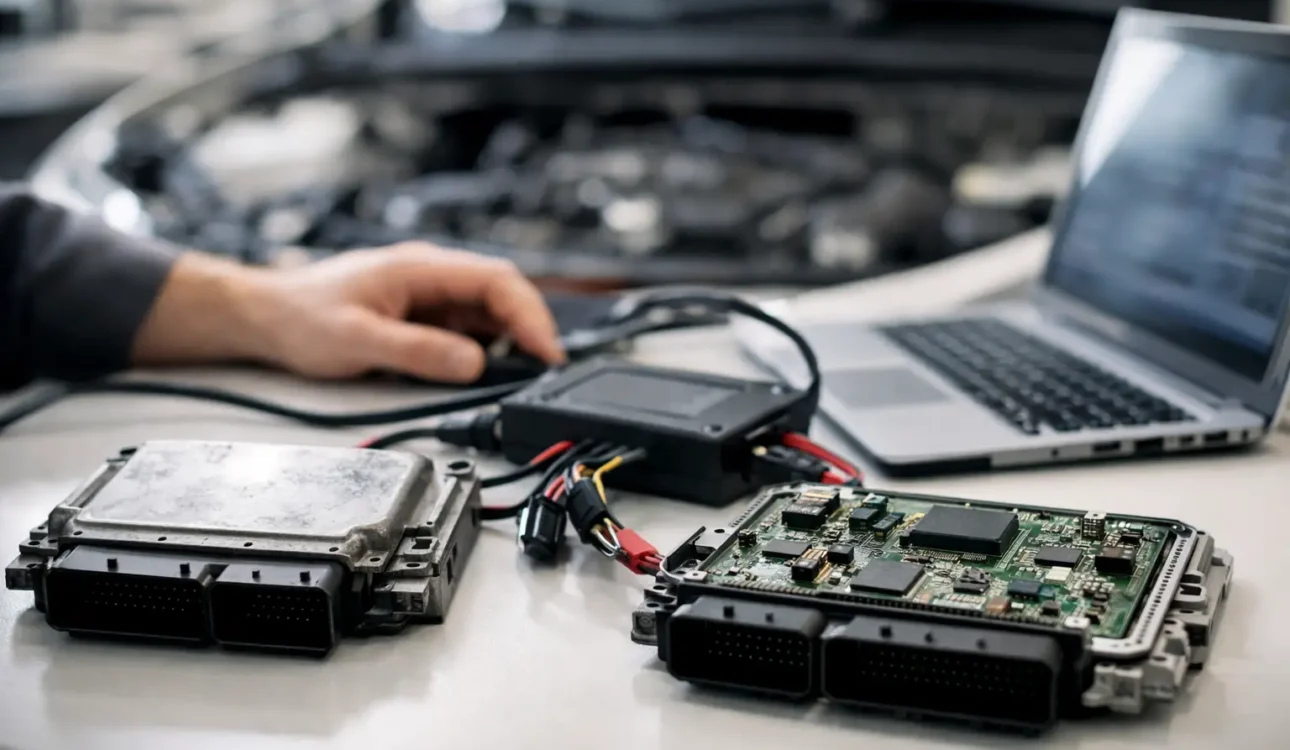
An engine control unit stores the data that allows it to work with the rest of the vehicle. Depending on the make and model, that can include immobiliser information, coding, software configuration and other vehicle-specific data. When the original ECU fails, cloning means transferring the relevant data from the original unit to a matching donor ECU so the replacement can behave like the original.
In plain terms, the vehicle sees the donor unit as if it were the one that came with the car or van. That can avoid a full dealer setup, and in many cases it avoids replacing other linked parts as well.
This matters because modern vehicles do not treat modules as simple swap-in parts. The ECU often talks to the body control module, immobiliser, keys and dashboard. Change one piece without the right data and the vehicle may crank but not start, or it may not communicate properly at all.
When cloning is the right answer
Cloning is useful when the original ECU is faulty but still readable. That distinction matters. If the damaged unit still allows access to the critical data, there is a strong chance that data can be moved to a compatible replacement.
A common example is water damage, internal component failure, power surge damage or a no-start condition traced back to the ECU. Trade customers also see it after accident repair, jump-start mistakes or failed repair attempts on second-hand modules. In those cases, an ecu cloning service can be the quickest route back to a working vehicle.
For owners, the main benefit is often cost. A brand-new ECU from the dealer can be expensive before fitting and coding are even added. For garages and body shops, time is just as important. Waiting on dealer parts, online coding appointments or manufacturer restrictions can slow a job down badly.
That said, cloning is not always the answer. If the original unit is completely dead and its data cannot be recovered, other routes may be needed. That might mean virginising, programming from scratch, or in some cases replacing linked modules as part of the repair.
How the ECU cloning process works
The process starts with proper identification. Part numbers, hardware references, software versions and vehicle details all matter. A donor ECU needs to be suitable, not just physically similar. Fitting the wrong version can create more problems than it solves.
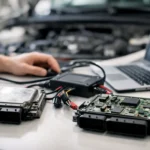
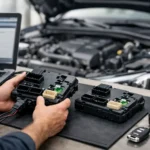
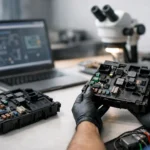
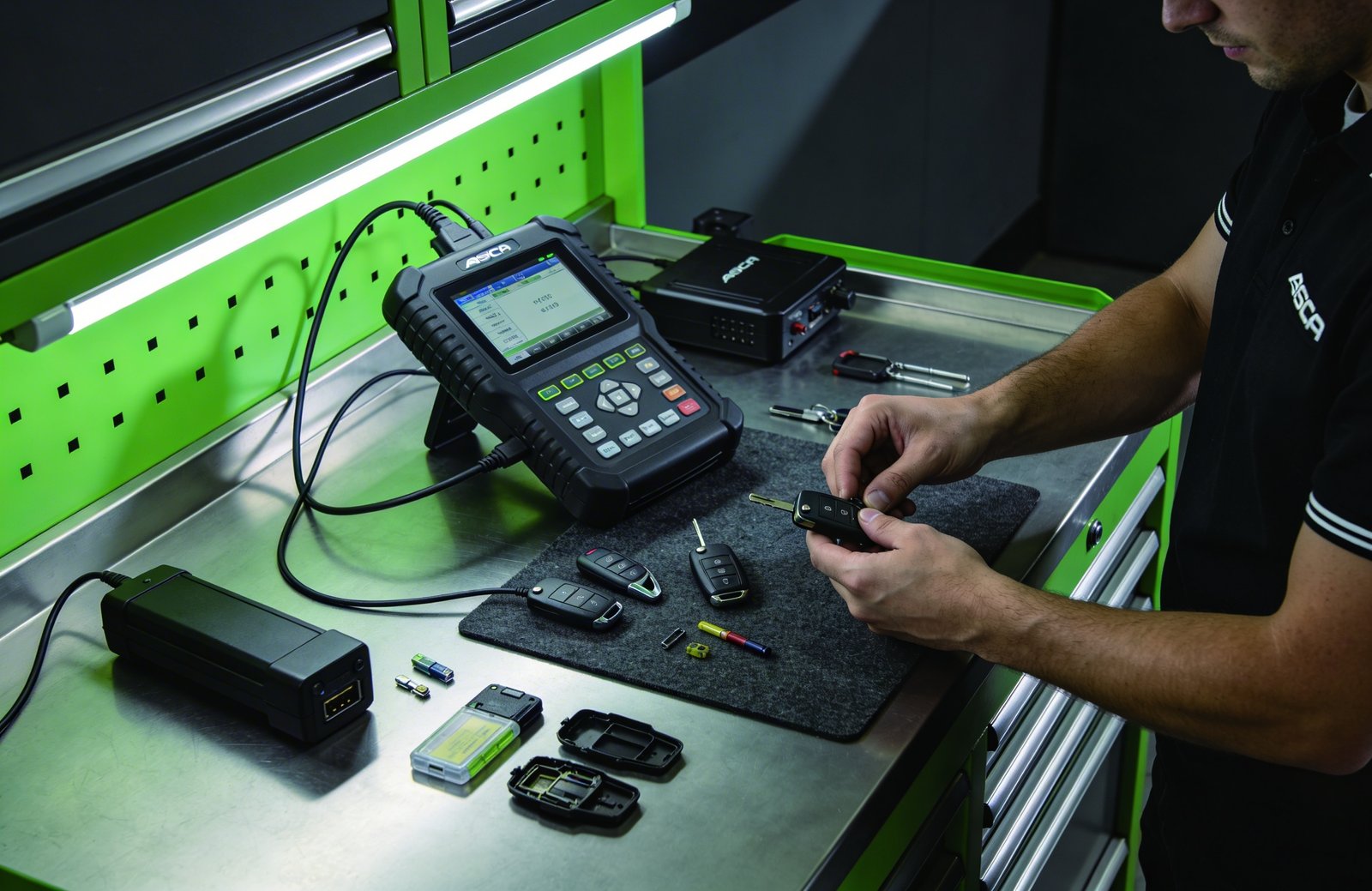
Once compatibility is confirmed, the original ECU is assessed to see whether the required data can be read. Depending on the unit, that may be done through bench reading, boot mode, BDM, JTAG or direct memory access. The method depends on the make of ECU and the condition it is in.
The important part is not simply copying everything blindly. A proper job means extracting the data needed for the replacement to work correctly in that specific vehicle. In many cases that includes immobiliser data and coding, and sometimes calibration information as well.
The donor unit is then prepared and written with the cloned data. After that, testing matters. The goal is not just to produce a readable file on a screen, but a module that starts, runs and communicates as it should once refitted to the vehicle.
ECU cloning service versus ECU replacement
For many customers, the question is simple. Why clone at all if you can just replace the unit?
The answer usually comes down to cost, speed and complexity. Dealer replacement often means a new ECU, dealer-level coding and, depending on the system, additional steps for immobiliser matching or online authorisation. On some vehicles that process is straightforward. On others, it is expensive and awkward.
Cloning can cut through a lot of that. If the original data is transferred properly, the donor ECU is already matched to the car in practical terms. That can reduce labour, avoid extra parts and get the vehicle back on the road faster.
But there are trade-offs. Cloning depends on the condition of the original ECU and the availability of a correct donor unit. If the original cannot be read, cloning may not be possible. If the donor unit is wrong, the repair may fail or create fresh faults. It is a technical job that needs proper equipment and experience, not guesswork.
Why compatibility matters so much
One of the biggest misunderstandings around ECU work is assuming that matching the part number is enough. Sometimes it is. Often it is not.
Different revisions can exist under near-identical labels. Software versions may differ. Some units have known issues with checksum handling, internal flash layout or immobiliser storage. Others are locked down more heavily and need a specific route to read or write safely.
That is why a proper assessment matters before any work begins. It saves time, avoids damaging a usable donor unit and reduces the risk of fitting a module that creates fresh communication problems. For garages, this is often the difference between a profitable repair and a car that comes back on a recovery lorry.
What vehicle owners should expect
If you are a vehicle owner, you do not need to know every protocol or memory type. What you do need is a clear answer on whether cloning is possible, whether your original ECU is likely readable, and whether the donor unit is suitable.
A decent service should be honest about the unknowns. Sometimes an ECU has to be opened and tested before anyone can confirm recovery of the data. Sometimes the signs are good, but the internal damage is worse than expected. Anyone promising every ECU can be cloned without seeing the unit should raise concerns.
You should also expect plain advice on cost versus value. On an older vehicle, cloning can be a very sensible repair. On a low-value car with multiple electrical faults, it may not be. Good advice is not about selling the biggest job. It is about getting the right result.
Why garages and trade customers use ECU cloning
For trade customers, an ecu cloning service is often about workflow. A garage may diagnose a failed ECU but not have the bench tools, software access or donor matching knowledge to complete the job in-house. Outsourcing that part makes sense when the goal is to move the vehicle through the workshop without tying up staff and ramp time.
Body shops and dealerships also benefit when a module issue appears in the middle of a wider repair. Instead of passing the customer from one specialist to another, the module can be handled by someone set up for that work.
This is especially useful with vehicles where the ECU is only one part of the immobiliser picture. Specialist electronics support helps avoid the trial-and-error approach that wastes hours and can still end in a non-runner.
Choosing the right specialist for ECU cloning service work
You want somebody who understands both the electronics and the vehicle. That sounds obvious, but the two do not always come together. Reading data from a module is one thing. Knowing what that vehicle needs to start and communicate properly afterwards is another.
Look for a provider who can explain the likely route, the risks and the limits. If they also handle related work such as key programming, BCM or BSI cloning, immobiliser issues and module repairs, that usually tells you they understand the whole system rather than one isolated box.
Mobile support can also be useful where it fits the job. In County Durham and within reach of Crook, some faults can be assessed with the vehicle on site, which saves transport delays and helps narrow down whether the ECU is truly the issue before the module work begins. That practical approach is part of why businesses like Key Crafters are used by both motorists and trade customers.
The value is in getting the vehicle moving again
A failed ECU can look like a dead end, especially when the first quote points straight at dealer replacement. Often it is not that simple. Cloning can be a sensible, cost-effective repair when the original data is still recoverable and the right donor unit is used.
The best outcome is not a clever technical process for its own sake. It is a car or van that starts properly, communicates as it should and gets back to work without unnecessary expense. If that is what you need, the right specialist can help you find the practical route rather than the expensive one.