
A warning light after an accident is one thing. A vehicle that still refuses to clear airbag faults after repairs is another. That is usually the point where a crash data removal service becomes relevant. If the airbag control module has stored collision data, fitting parts alone often will not finish the job.
For many drivers and repairers, this sits in the awkward gap between body repair and electrical diagnosis. The damaged parts may already be replaced. The wiring may test fine. But the module still holds crash event information, and the system treats the vehicle as if the impact has not been properly dealt with. That is where specialist reset work can save time, money, and a fair bit of frustration.
What a crash data removal service actually does
When a vehicle is involved in a collision, the airbag module can record crash data. Depending on the make, model, and severity of the incident, that stored information may lock the module into a state where fault codes cannot simply be cleared with a basic scan tool. In plain terms, the car remembers the accident.
A crash data removal service is the process of reading the airbag module, removing the stored crash event data where appropriate, and restoring the unit so it can be reused if the module is otherwise healthy. This is not the same as hiding a warning light or ignoring faults. The goal is to return the module to a usable state after proper repairs have been carried out.
That distinction matters. If seatbelt pretensioners, airbags, impact sensors, wiring, or other related components are still faulty, a reset on its own will not make the system right. The module has to be part of the repair, not a shortcut around it.
Why replacement is not always the best route
Main dealer replacement can be expensive, and on some vehicles it can also create delays. New modules may need ordering, coding, pairing to the vehicle, or additional programming before the car is ready to go. For body shops and garages, that can mean a repaired vehicle sitting around waiting for one electronic part to catch up with the rest of the job.
A crash data removal service can be a sensible alternative when the original module is still serviceable. Reusing the existing unit often avoids unnecessary replacement costs and reduces the amount of coding work needed. For trade customers, that can help protect margins. For private owners, it can mean avoiding a bill that feels out of proportion to the actual problem.
It does depend on the vehicle and the condition of the module. Some units reset cleanly. Some are too badly damaged, water affected, or electronically compromised to trust. A proper assessment matters more than a blanket promise.
When crash data removal makes sense
The most common situation is after airbag deployment or seatbelt pretensioner activation following a collision. Once the physical repairs are complete, the airbag control unit may still store deployment or impact data that keeps the warning light on and the system in fault mode.
It can also come up when a garage or body shop has already replaced obvious damaged parts but still cannot clear the restraint faults. At that stage, the problem is often no longer mechanical. It is in the stored memory of the module.
For salvage rebuilds, this service is also common, though the same rule applies – only after the vehicle has been repaired properly. The electronics should support a safe repair, not compensate for an incomplete one.
What a proper crash data removal service should include
A decent service starts with identifying the exact module and confirming whether reset is a suitable option. Different manufacturers use different systems, memory structures, and security arrangements. What works on one model may not apply to the next, even within the same brand.
The module is then read using specialist equipment. The stored crash information is removed where possible, and the data is checked before the unit is returned or refitted. After that, the vehicle should be scanned again to confirm whether any remaining faults are genuine current issues rather than old crash records.
That final check is important because airbag faults are rarely one-size-fits-all. A reset can remove stored event data, but it will not repair a broken loom, failed sensor, deployed pretensioner, or damaged clock spring. If those faults remain, the system will still report them.
Why specialist equipment matters
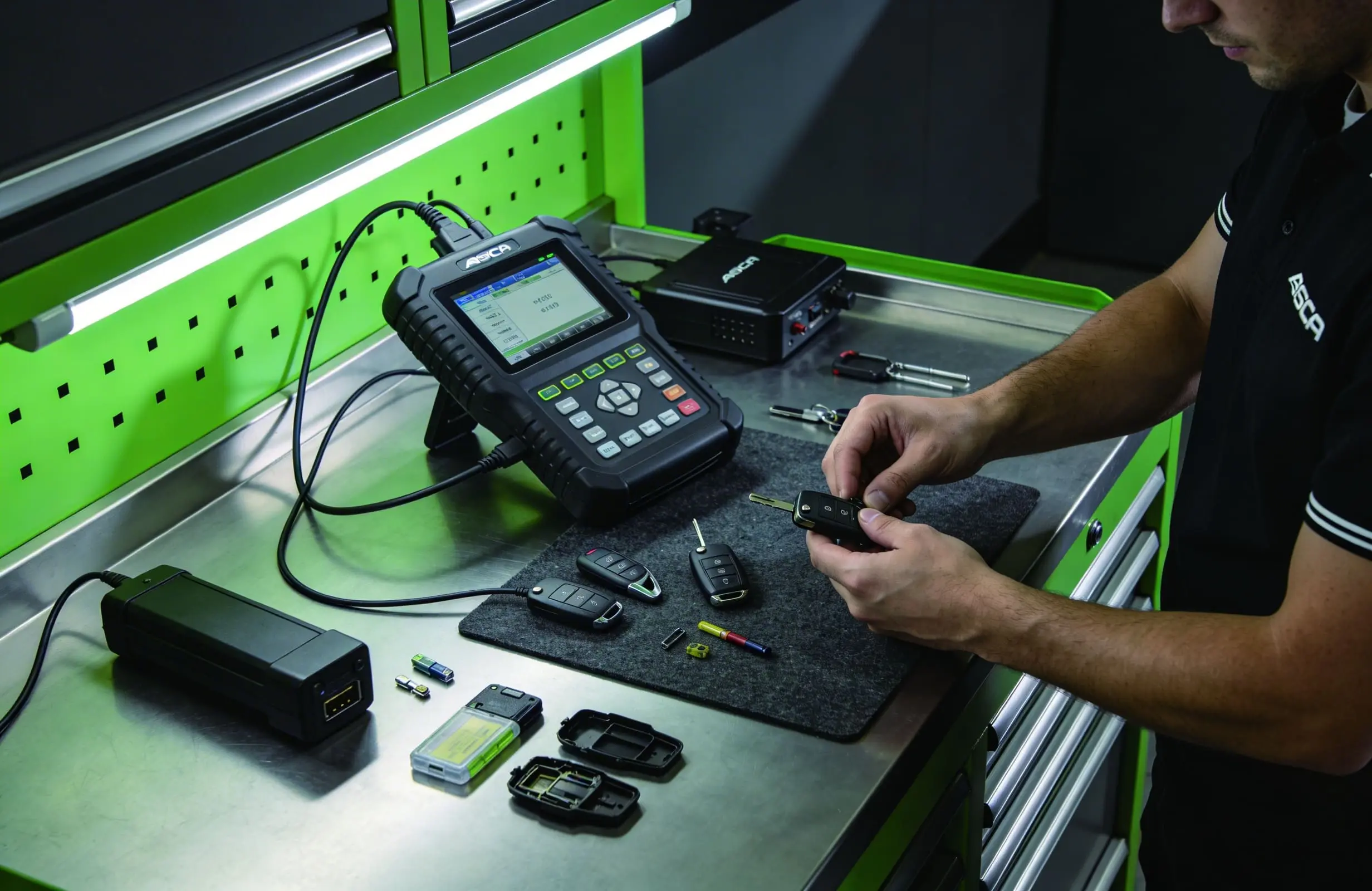
This is not a job for guesswork or a cheap generic scanner. Airbag systems are safety-critical, and module handling needs to be done correctly. Reading, editing, and verifying restraint module data requires the right hardware, the right software, and experience with the specific platform.
Some vehicles are straightforward. Others, especially newer or premium models, can be far less forgiving. European vehicles in particular often need more than basic diagnostic access. Security, coding dependencies, and module variants all come into play.
That is why trade customers tend to outsource this work rather than experiment in-house. One wrong move can corrupt module data, create extra faults, or leave the vehicle needing a replacement unit anyway. Paying for specialist help is often cheaper than learning the hard way.
Crash data removal service for garages and body shops
For trade customers, speed and predictability matter as much as the technical side. A body shop needs to know whether the module can be reset, whether the car still has live faults after reset, and what the next step is if it does.
A reliable crash data removal service supports that process by taking one awkward job off the bench. Instead of tying up a technician with specialist electronics work, the repairer can focus on the mechanical and structural side while the module is handled properly.
This is especially useful where insurers, customer deadlines, and workshop space all add pressure. A vehicle that lingers because of an unresolved airbag warning is not just annoying. It takes up time, space, and money.
What vehicle owners should know before booking
If your car has been in an accident and the airbag light is still on after repairs, do not assume a reset is the only thing required. It may be the answer, but the system needs diagnosing properly. A warning light can point to stored crash data, but it can also point to active faults elsewhere in the restraint system.
It also helps to be realistic about what has already been done. If airbags or pretensioners have deployed, those parts usually need replacing. If the wiring or connectors have been damaged, they need proper repair. The module should be dealt with as part of that overall repair, not as a substitute for it.
If you are unsure, say exactly what happened to the vehicle, which parts were replaced, and whether the fault codes have been read. Good information saves time.
Mobile support and practical savings
For some jobs, the biggest benefit is convenience. If a specialist can deal with module and vehicle electronics work without sending you down a main dealer route, that can save days of waiting and a sizeable amount of money.
For local customers around County Durham, especially those juggling work, family, or a van that needs to earn its keep, practical support matters. The same applies to independent garages that need dependable help without pushing every electronic issue back to the dealer network.
That is where an experienced auto locksmith and vehicle electronics specialist can offer more than key work alone. Key Crafters handles advanced module services as well as keys, lockouts, and programming, so customers are not bounced between three different places for one repair.
The main trade-off to understand
Resetting a module is often cost-effective, but it is not automatically the right answer in every case. If the control unit has internal damage, corrosion, previous poor repair work, or data issues that make it unreliable, replacement may still be the better option.
The sensible approach is straightforward. Assess the module, reset it where appropriate, and be honest when replacement is the safer path. That is better than forcing a repair that should not be forced.
If your vehicle or your customer’s vehicle is repaired but still stuck with airbag faults, the answer may be simpler than a full dealer replacement. The key is getting the module checked by someone who understands both the electronics and the practical realities of getting cars and vans back on the road. A clear answer, done properly, is worth far more than a cheap guess.