When a car suddenly refuses to start, loses central locking, throws up odd electrical faults, or acts as though half its systems have forgotten who they are, the problem is not always the key, battery, or ECU. Quite often, the fault sits in the body control side of the vehicle – and that is where a bsi module cloning service can make the difference between a sensible repair and a very expensive guessing exercise.
On many vehicles, especially Peugeot and Citroen models but also others with similar body control architecture, the BSI module is central to how the car recognises keys, manages immobiliser data, and controls a long list of comfort and communication functions. If it fails, gets water damaged, suffers voltage spikes, or is corrupted during attempted repairs, replacing it is rarely as simple as bolting in a second-hand unit and carrying on.
What a BSI module cloning service actually does
A proper BSI module cloning service transfers the critical data from your original unit to a donor replacement so the replacement behaves like the original module. That usually includes immobiliser information, vehicle configuration, key data, and other coding that ties the unit to the vehicle.
That matters because modern vehicles do not treat control units as generic parts. They are linked into the car’s wider electronic identity. Fit the wrong BSI, or fit one without the correct data, and you can end up with non-start, warning lights, inoperative locking, wipers doing their own thing, missing mileage information, or communication faults across the network.
Cloning aims to avoid all of that by keeping the vehicle’s original identity intact. In practical terms, it can often save time, reduce coding complications, and avoid the cost of full dealer replacement routes.
When a BSI module cloning service makes sense
The most common situation is straightforward failure of the original unit. Water ingress is a regular cause, especially where the module sits in a vulnerable location. Power surges, flat battery events, jump-starting gone wrong, accident damage, and internal component faults can also leave a BSI beyond reliable repair.
Sometimes the original module still reads well enough for data extraction even though the vehicle no longer functions properly. That is usually the ideal cloning scenario. We recover the important data, prepare a compatible replacement, and transfer what the car needs to recognise the new unit as its own.
There are also cases where a garage or vehicle owner has already tried a used replacement, only to find the car still will not start or now has extra faults. That is a common sign the replacement has not been properly matched to the vehicle. A second-hand BSI on its own is not a repair. The data side matters just as much as the hardware.
For trade customers, cloning is often the practical option when turnaround matters. If a car is occupying workshop space and the customer wants it back quickly, waiting on dealer parts, dealer booking slots, and full online coding can be the slower and more expensive route.
Why not just fit a used BSI?
Because used modules come with someone else’s data inside them.
That data may include immobiliser pairing, VIN-related information, key records, and configuration settings for a completely different vehicle specification. Even when the part numbers appear to match, the stored content may not. That is why one used unit might power up but leave you with no crank, no remote locking, mismatched options, or persistent fault codes.
This is the point many people miss. The module itself is only part of the job. The stored data is what makes it belong in the vehicle.
There are exceptions. Some units can be virginised or reconfigured depending on make, model, and software generation. But that is an it-depends situation, not something to assume. Cloning is often preferred because it preserves the original vehicle data rather than trying to rebuild everything from scratch.
What can be copied and what depends on the fault
A good BSI cloning job is only as good as the recoverable data in the original unit. If the original module still communicates or its memory contents can be read directly from the board, cloning is usually very achievable.
If the module is heavily burnt, physically broken, or the memory area is corrupted beyond recovery, the route may change. In those cases, options can include rebuilding from available data, adapting a replacement module, pairing keys again, or in some cases using dealer-level programming methods if the platform demands it.
That is why honest assessment matters. No decent specialist should promise every failed BSI can be cloned before checking the unit. Sometimes it is straightforward. Sometimes it becomes a data recovery job. Sometimes repair of the original is the better answer if the damage is localised.
The real benefit – cost, time, and less disruption
For most vehicle owners, the main question is simple: will this get the car back on the road without dealer-level bills? In many cases, yes.
A replacement route through the main dealer can involve a new module, coding, possible key programming, and delays tied to appointments and parts supply. On older vehicles, that can quickly become hard to justify. Cloning can offer a more cost-effective route, especially where a suitable donor unit is available and the original data is recoverable.
For garages and body shops, the value is just as clear. You keep the job moving, avoid tying up workshop time on a specialist electronics problem, and get a clearer repair path for the customer. That is often better than fitting parts speculatively and hoping the network faults disappear.
How the process usually works
The first step is identifying the exact fault and confirming the BSI is genuinely the issue. Electrical faults can overlap. A failing battery, corroded fuse box, damaged wiring, or another network module can mimic BSI failure. Proper diagnostics matter before anyone starts condemning expensive electronics.
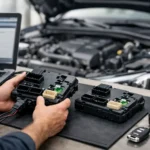
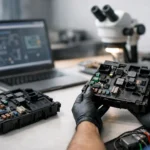
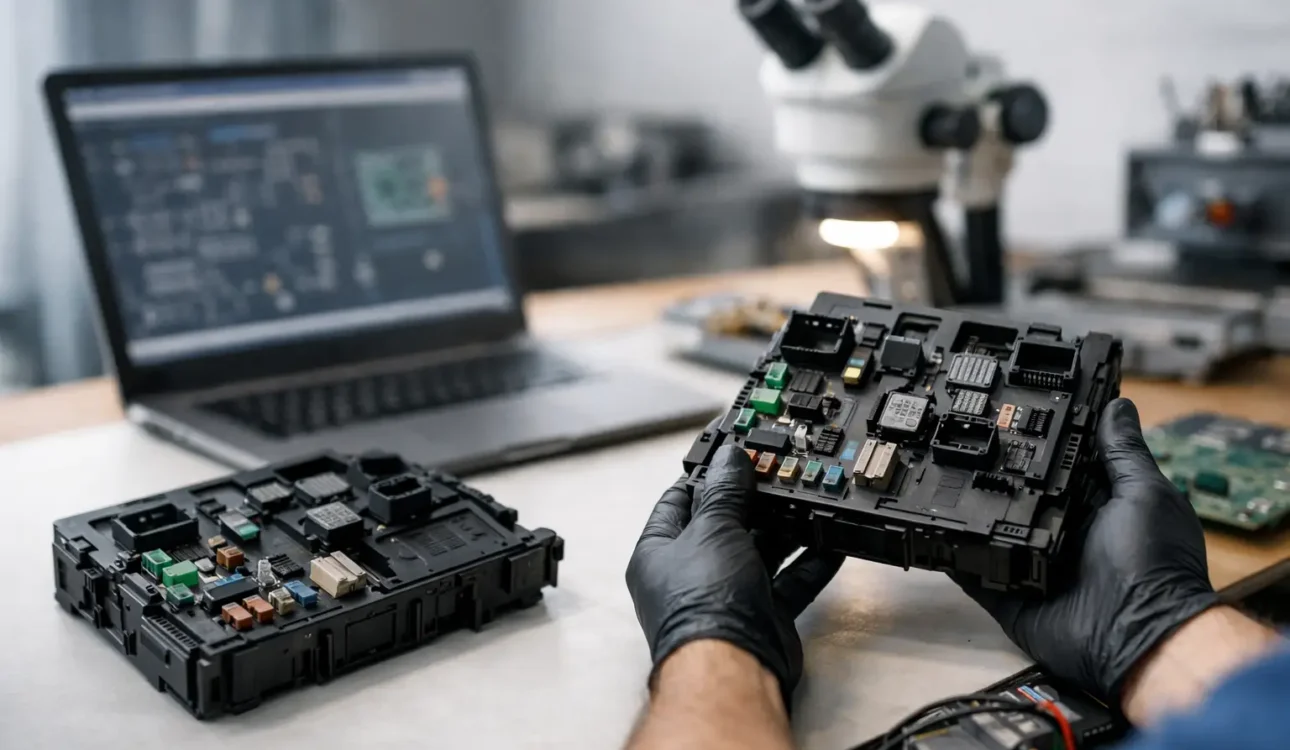
Once the module fault is confirmed, the original unit is inspected and tested for data recovery. If cloning is viable, the original data is extracted using specialist tools and bench methods rather than guesswork through the diagnostic socket alone.
A compatible replacement unit is then prepared. Compatibility is critical. Matching part numbers help, but so do hardware versions, software family, and vehicle application. The recovered data is written across, the replacement is checked, and the unit can then be refitted and tested in the vehicle.
That final testing stage matters more than people think. Successful reading and writing is one thing. Confirming immobiliser operation, key recognition, central locking, communication, and relevant body functions is what turns a bench job into an actual repair.
BSI module cloning service for trade customers
If you run a garage, body shop, or vehicle sales operation, outsourcing this type of work is often the sensible move. BSI faults can eat hours very quickly, especially if the vehicle has already had battery issues, water damage, or attempted module swaps.
A dependable bsi module cloning service helps you avoid guesswork and keeps you from investing in specialist equipment for jobs that only come through occasionally. It also gives you a clearer answer for your customer – either the original can be cloned, repaired, or another path is needed.
That honesty matters in trade relationships. No one wants a module sent away for cloning only to get vague answers back. You need a realistic assessment, compatible replacement advice, and a service that understands immobiliser systems rather than treating the unit like a generic electrical part.
Choosing the right specialist
This is one of those jobs where the cheapest option can become the expensive one. If a module is handled badly, data can be lost. If the wrong donor unit is used, the vehicle may still not behave correctly. If the problem was misdiagnosed in the first place, replacing the BSI solves nothing.
Look for a specialist who works with vehicle electronics day in, day out, not someone adding module cloning as an afterthought. Experience with immobiliser systems, EEPROM and processor reading, coding, and fault tracing all matter. So does clear communication. You want to know what is possible, what depends on inspection, and what the fallback plan is if the original data cannot be fully recovered.
For vehicle owners and trade customers in the North East, a mobile electronics specialist can also save time by helping with diagnosis, removal support, and related programming work where needed. That is often more practical than bouncing between a garage, auto electrician, and dealer. At Key Crafters, that joined-up approach is a big part of the service.
If your vehicle has BSI-related faults, or your workshop has a car waiting on body control data transfer, the best next step is not buying random used modules online. It is getting the original unit assessed properly, because the right repair usually starts with the data that is already in the car.