A key fob usually picks the worst possible moment to stop working – when you’re loading the van, parked outside work, or already late for the school run. If you’ve searched for car key fob repairs near me, you probably do not need a lecture on how modern keys work. You need to know whether the problem is repairable, how quickly it can be sorted, and whether you are about to be pushed towards an expensive dealer replacement you may not actually need.
The good news is that many key fob faults are fixable. The less helpful truth is that not every fault looks the same from the outside. A dead battery, damaged buttons, broken solder joints, water ingress, failed transponder chips and vehicle-side programming issues can all produce similar symptoms. That is why proper diagnosis matters.
When car key fob repairs near me are actually the right fix
Some keys are genuinely repair jobs. Others are already beyond sensible repair and need replacement, reprogramming, or in some cases deeper vehicle electronics work. The trick is knowing the difference before money is wasted.
If your remote buttons have become intermittent, the case is split, or you have to press unusually hard to lock or unlock the car, the fault is often inside the fob itself. Worn microswitches, cracked circuit boards and poor battery contact are common. These can often be repaired faster and more cheaply than replacing the whole unit.
If the blade still turns in the ignition or the vehicle still starts when the key is held close, that points towards a remote fault rather than a full immobiliser failure. On the other hand, if the car will not recognise the key at all, or you have warning messages around key detection, steering lock, or start authorisation, the issue may go beyond the shell in your hand.
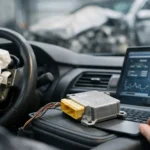
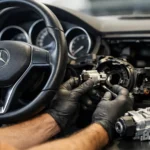
That matters because some customers are told they need a new key when the real fault sits in the car’s control modules. On certain models, especially higher-spec BMW, Mercedes and VAG vehicles, the line between a key problem and an electronic module problem is not always obvious without the right equipment.
Common signs your key fob needs repair
Most people notice the obvious first. The buttons stop responding. The range gets shorter. The central locking works one day and not the next. But there are a few patterns worth paying attention to.
A key that only works after several presses often has worn button switches or poor battery contact. A key that has stopped after being dropped may have internal board damage even if the outer casing looks fine. A key that worked before getting wet can corrode internally and fail days later, not straight away.
Sometimes the issue is mechanical as much as electronic. Flip keys can develop hinge wear, damaged blades or loose housings. That may sound minor, but a failing shell can put stress on the electronics inside and turn a cheap repair into a full replacement if ignored.
Then there is battery confusion. Plenty of drivers fit a fresh battery and assume the key itself must be fine. Not always. A new battery will not cure broken solder joints, damaged RF components, failed coils or a key that has lost synchronisation with the vehicle.
What a proper key fob repair should involve
A decent repair is not just changing a battery and hoping for the best. It starts with testing.
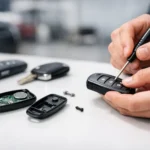
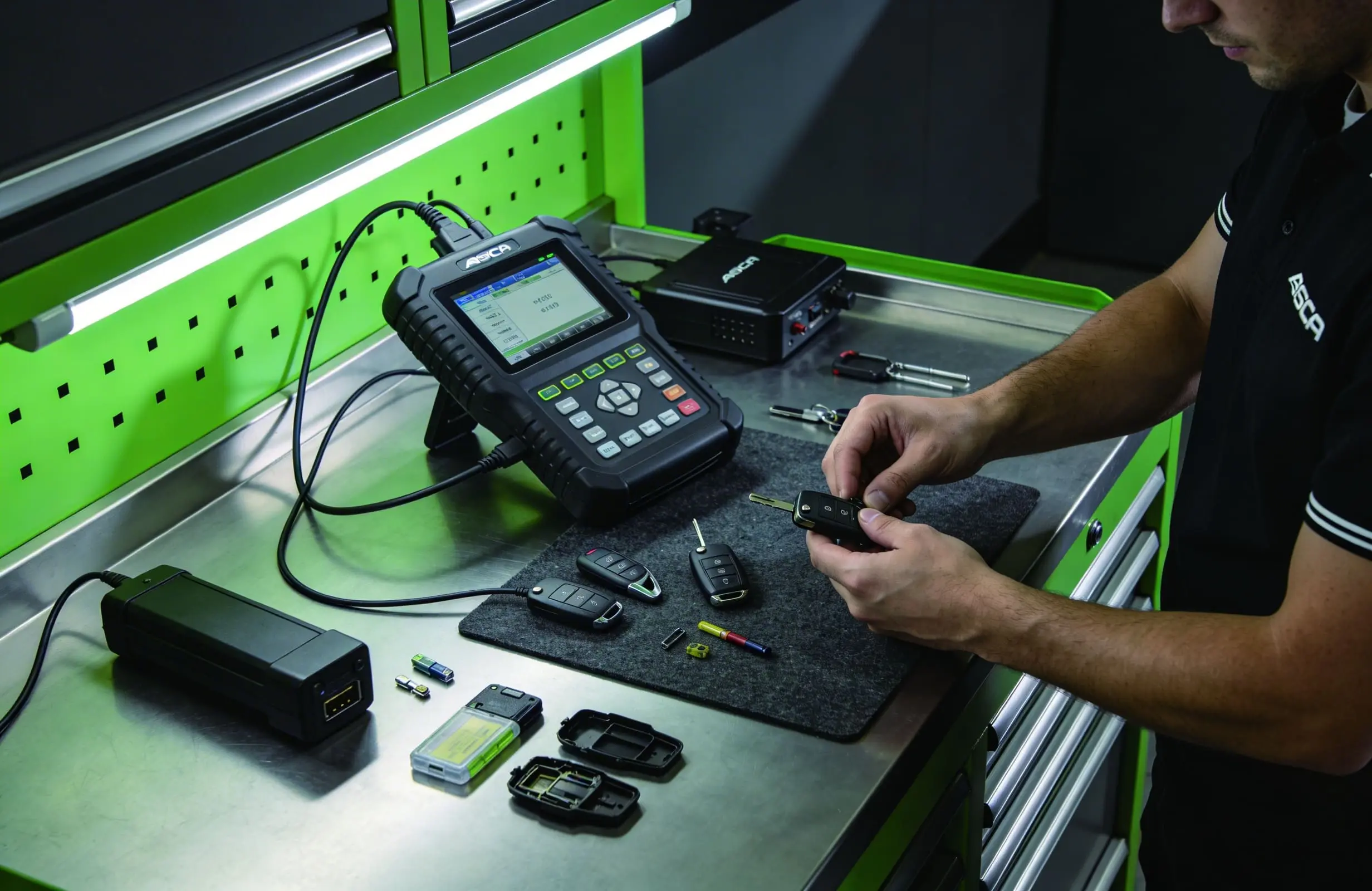
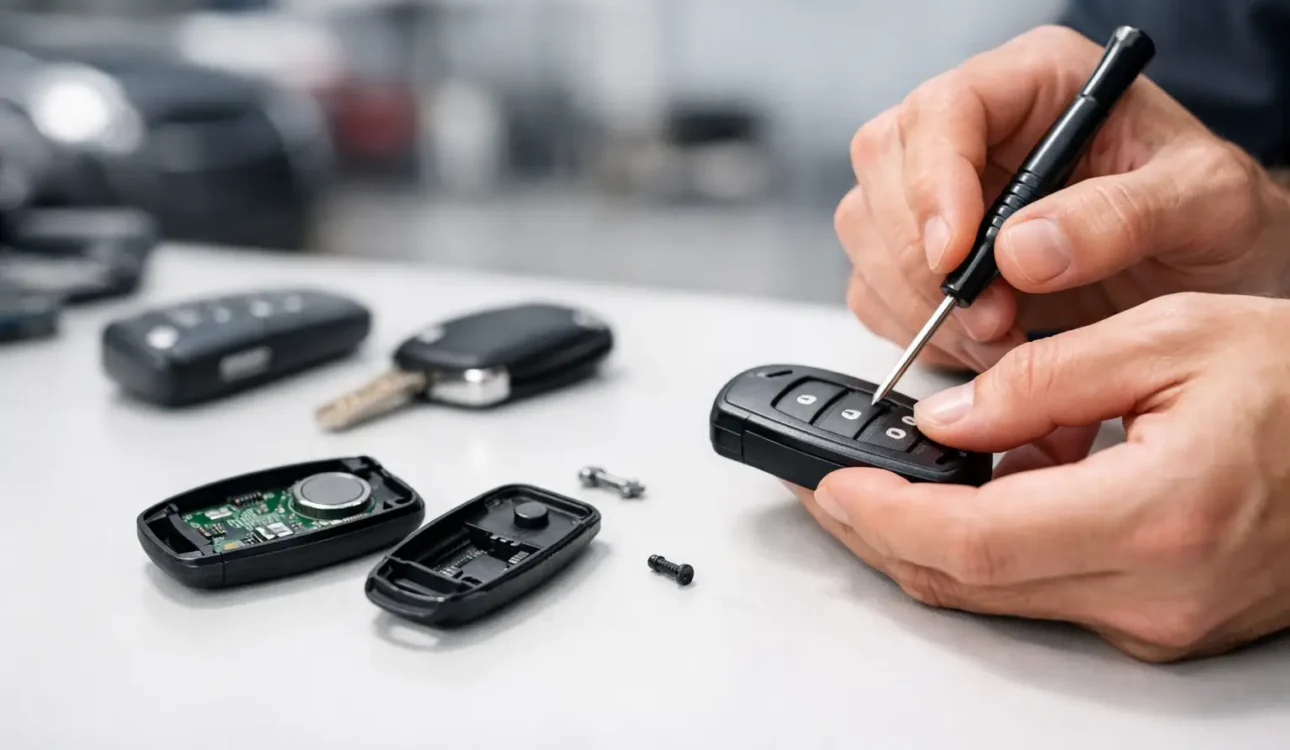
First, the key should be checked for remote output, transponder function, battery voltage and obvious physical damage. Then the casing is opened and the circuit board inspected. This often reveals damage the customer cannot see – cracked switch legs, liquid contamination, lifted tracks or impact damage near the battery holder.
If the board is repairable, the fix may involve replacing microswitches, rebuilding damaged contacts, resoldering weak joints or fitting a new shell and transferring the electronics across. If the issue is syncing or programming related, the next step is checking whether the vehicle is correctly receiving the signal and whether the immobiliser data still matches.
This is where experience counts. A tidy-looking key can still be dead internally, and a battered-looking one can often be saved. There is no benefit in guessing, especially on newer vehicles where replacement keys may need coding, dealer-level diagnostics or security-compliant procedures.
Repair or replace? It depends on the fault
This is usually the first question, and the honest answer is that it depends on age, damage and vehicle type.
If the original board is intact and the fault is limited to buttons, casing, battery terminals or minor board damage, repair is often the sensible route. It keeps the original electronics, avoids unnecessary coding in many cases, and usually costs less than a new key.
If the transponder chip is missing, the board is badly corroded, the PCB is snapped, or the vehicle no longer has any working keys at all, replacement may be the better option. That is especially true when time matters more than preserving the old unit.
There is also a middle ground. Sometimes the key housing is beyond use but the electronics are still recoverable. In that case, rebuilding the key into a new shell can restore full function without starting again from scratch.
For trade customers, this matters because the cheapest route is not always the first one suggested by the dealer. A garage dealing with a customer handover, a body shop finishing a repair, or a used vehicle site trying to supply a proper spare key needs a practical answer, not a parts department script.
Why mobile help often makes more sense than the dealer
If your car is stuck on the drive or your van is off the road, travelling to a dealer is not much of a plan. Mobile auto locksmiths can usually inspect, test and sort many key issues on site, which saves recovery costs and cuts down downtime.
That is the real value in searching locally. Not just someone nearby, but someone equipped to diagnose the fault properly where the vehicle sits. For straightforward remote repairs, that can mean a quick fix. For lost keys, non-start issues or immobiliser faults, it can mean key programming and electronic testing without the delays that often come with booking into a main dealer.
For drivers in County Durham and within reach of Crook, a mobile service is particularly useful when the problem is urgent or the vehicle cannot be moved safely. It is one of the reasons many motorists and garages choose specialists such as Key Crafters rather than defaulting straight to dealer replacement.
What to ask before booking car key fob repairs near me
Not every locksmith works at the same level, and not every key problem is just a key problem. Before booking, ask what they can actually test and repair.
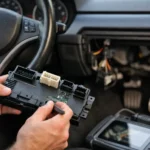
A good provider should be able to explain whether they handle button repairs, case rebuilds, programming, spare keys, all-keys-lost situations and vehicle-side electronic faults. If they only replace shells, that is useful to know early. If they can also deal with immobiliser data, BCM or BSI issues, steering lock faults or module-related non-start problems, that is even better when the diagnosis is less clear.
It is also worth asking whether they work with your make regularly. Some vehicles are simple enough. Others are not. BMW, Mercedes and VAG models can require more specialised tools and experience, especially where key recognition faults overlap with control module issues.
Finally, ask what happens if the key is not repairable. A proper specialist should be able to move from diagnosis to replacement without turning it into a second job for someone else.
How to avoid making the fault worse
When a key fob starts playing up, people often do the same few things – bend the battery contacts, force the case open with the wrong tool, keep pressing dead buttons, or buy a cheap shell that does not fit properly. Sometimes that works for a day. Sometimes it finishes the key off.
If the key has been dropped in water, dried on a radiator or left damp in a pocket, do not keep trying it repeatedly. If the shell is cracked, stop using it as your only key if you have a spare. And if the vehicle is giving immobiliser or steering lock messages, do not assume a battery swap will solve it.
The sooner the fault is assessed properly, the better the chance of a straightforward repair.
A faulty key fob is stressful, but it does not always mean a new key, a tow to the dealer, or a large bill. Sometimes it is a simple repair. Sometimes it points to a wider vehicle electronics issue. Either way, the best next step is not guessing – it is getting the key and the vehicle checked by someone who can sort both.