You realise how much your car key matters at the worst possible moment. It is usually when you are already late, stood in a car park, or staring at a van that will not start because the key has vanished, snapped, or stopped talking to the vehicle. When that happens, the question becomes simple very quickly – auto locksmith or dealership?
For most drivers, and plenty of garages as well, the honest answer is that it depends on the fault, the vehicle, and how quickly you need a working solution. A dealership has its place. So does a specialist auto locksmith. The trouble starts when people assume they do exactly the same job, at the same speed, for the same cost. They do not.
If you are weighing up your options, it helps to know where each route is strong, where it is weak, and what will actually get the vehicle back on the road without wasting time or money.
Auto locksmith or dealership – what is the real difference?
A dealership works within the manufacturer system. That usually means genuine parts, model-specific procedures, and access to factory-backed processes. If your vehicle is under warranty, has a recall issue, or needs a brand-new part ordered directly through the maker, that can matter.
An auto locksmith focuses on access, keys, immobilisers, programming, and in many cases vehicle electronics. A good specialist is set up to solve practical problems quickly, often on site, without the vehicle needing to be recovered to a workshop. That difference alone changes the experience for many customers.
If your only key is lost and the car is stuck on your drive, a dealership may ask for proof of ownership, then order a key, then book the vehicle in once the part arrives. In some cases that is perfectly reasonable. In others, it leaves you waiting days or longer while the vehicle goes nowhere.
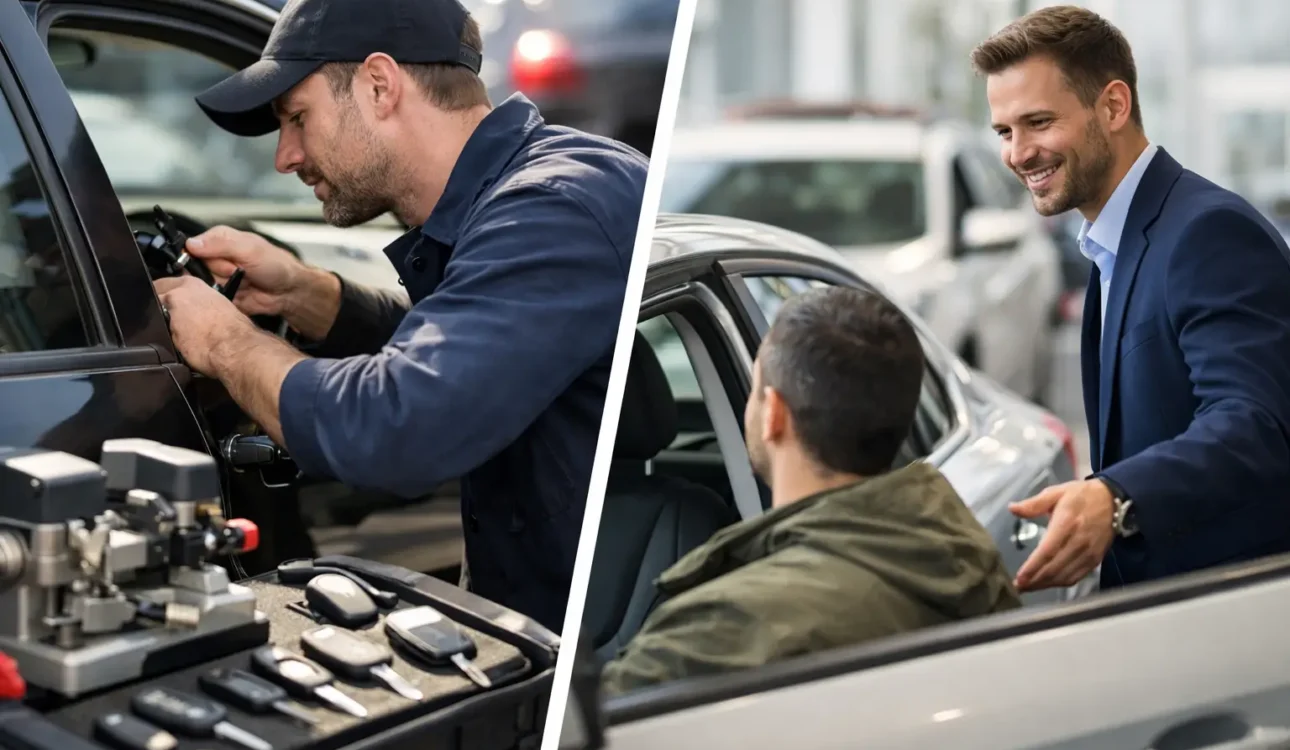
A mobile auto locksmith can often attend where the vehicle sits, cut and programme a key there and then, and sort the issue in one visit. That is not true for every make and model, but it is true far more often than many people realise.
When a dealership is the better option
There are times when the main dealer route is the right call. If the vehicle is very new, still covered by manufacturer warranty, or has security restrictions that require dealer-only authorisation, going through the dealership may protect your cover and keep the paper trail straightforward.
Some vehicles also have systems so tightly controlled by the manufacturer that an aftermarket solution is limited or simply not available. Certain key types, encrypted modules, or software functions may still need dealer-level ordering or online access through the brand.
The dealership can also make sense if you are already booking the car in for other manufacturer work. If the key issue is part of a bigger warranty claim, keeping everything in one place may be simpler.
That said, better option does not always mean faster option, and it certainly does not always mean cheaper option.
When an auto locksmith is the smarter choice
For urgent key problems, an auto locksmith is often the practical answer. Lost keys, spare key cutting, lockouts, damaged blades, faulty remotes, and many immobiliser-related issues can usually be dealt with far more quickly by a mobile specialist than by a dealership appointment process.
Convenience matters here. If the vehicle will not move, recovery costs can turn a simple key job into an expensive headache. Having someone come out to the car or van saves that step.
Cost matters too. Dealerships commonly replace complete units where a specialist may be able to repair, clone, code, or adapt what is already there. That difference is even bigger once electronics enter the picture.
For trade customers, the gap can be wider still. A garage or body shop does not want a vehicle blocking a bay while waiting for dealer parts if a specialist can clone a module, clear crash data, repair a steering lock fault, or programme keys without replacing half the system.
It is not just about keys anymore
This is where the comparison often gets misunderstood. Many people still hear “locksmith” and think only of opening doors or cutting a basic key. Modern automotive locksmith work goes well beyond that.
On many vehicles, the key is tied into immobiliser data, body control modules, steering locks, comfort systems, and engine management. A fault that looks like a bad key can sometimes be a damaged module, lost coding, crash data issue, or failed electronic component.
A dealership may approach that by replacing the affected unit with a new one, then coding it to the vehicle. Sometimes that is necessary. Sometimes it is not.
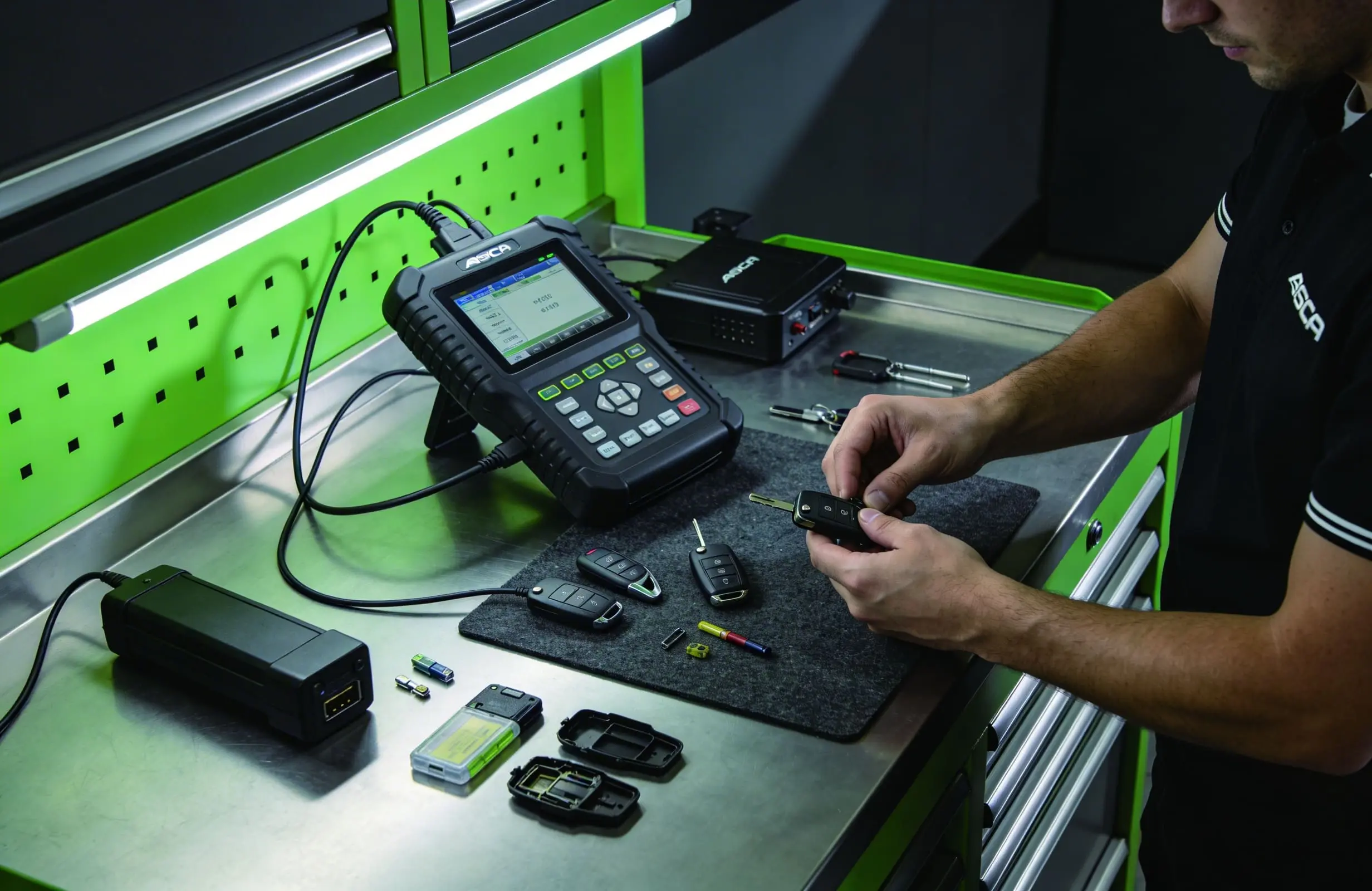
A specialist with the right equipment and experience may be able to test the actual cause, repair the original module, clone data to a donor unit, or recover the system in a way that saves a significant amount of money. For BMW and VAG vehicles especially, that specialist route can make a lot of sense when common electronic faults appear.
Cost, speed and hassle – where most people decide
For everyday motorists, the choice often comes down to three things.
First is speed. If you need to get to work, collect the kids, or get your van back earning, waiting a week for a booked slot rarely feels acceptable. A mobile locksmith is built around response and convenience, which is why this route often wins for all-keys-lost situations and lockouts.
Second is cost. A dealer quote can include new keys, new modules, labour, recovery, and waiting time. A specialist may be able to supply a working key, repair the fault, or code the necessary parts without the same level of replacement cost. Not every job will be cheaper, but many are.
Third is hassle. Taking ID, V5 details and security information to a dealer is normal enough, but arranging transport for a non-running vehicle is another matter. If the work can be done where the vehicle is parked, life gets easier.
Auto locksmith or dealership for trade customers
Garages, dealerships and body shops often face the same decision, just at a different scale. The key issue is not only price. It is workflow.
When a customer vehicle is waiting on a key, steering lock repair, airbag module reset, or cloned control unit, every extra day affects handover dates, workshop space, and customer satisfaction. Outsourcing to a capable specialist can be the quickest route to completion.
This is particularly useful when a workshop does not want to invest in every programming platform, cloning tool, EEPROM setup, and manufacturer process needed for occasional specialist jobs. It makes more sense to bring in someone who already does that work day in, day out.
That is why many trade customers use a specialist partner not because they cannot do any of it themselves, but because it is more efficient, more predictable, and often more economical.
What to ask before you choose
The best decision usually comes from asking a few plain questions.
Can the vehicle be repaired on site, or does it need recovery? Is the issue definitely the key, or could it be a module or immobiliser fault? Do you need a genuine new manufacturer part, or would repair or cloning solve the problem properly? Is the vehicle under warranty? How urgent is it?
It is also worth asking whether the provider deals with your make regularly. Experience matters. Two jobs can sound similar on paper and be completely different in practice depending on the model, year and security system.
A proper specialist should be upfront if the dealer route is genuinely the better one. That honesty matters. Not every problem should be forced into an aftermarket fix, and not every dealer quote is inflated for the sake of it. The right solution is the one that gets the vehicle sorted properly.
The best option is the one that fits the fault
There is no single winner in the auto locksmith or dealership debate because the job itself decides the answer. If you need manufacturer warranty support or dealer-only parts, the dealership may be the right place to go. If you need a fast, practical and cost-conscious fix for keys, lockouts, immobiliser faults or module problems, a specialist auto locksmith is often the better move.
For drivers and trade customers across County Durham, that usually means looking beyond the badge on the building and focusing on who can actually solve the fault with the least delay, least disruption, and least unnecessary replacement. If the job can be done properly at the vehicle, with the right equipment and experience, that is often the route that makes the most sense.
If you are stuck between the two, start with the problem in front of you rather than the assumption in your head. A good specialist will tell you where they can help, where the dealer is the better fit, and how to avoid paying for work you do not need.